Understanding External PIM: Radiated vs. Conducted
Passive intermodulation (PIM) is a major source of noise and signal interference, particularly for 5G networks. PIM occurs when two or more signals at a cell site mix in a non-linear system or device to produce new, undesired signals that, depending on their strength and proximity to the original signal, can cause interference. This interference can reduce wireless coverage and performance — and ultimately degrade the customer experience.
And while PIM can be found in many locations within and outside of the system, external PIM sources can be particularly difficult to find, much less address. Common sources include loose metal-to-metal contact or junctions of unmatched metals, oxidation, rust and more — all of which can be found anywhere outside the system. In addition, external PIM can be further broken down into two more categories: radiated and conducted PIM, both of which are unique and require their own solutions.

External PIM: Conducted vs. Radiated
While the wireless industry often tends to think of PIM as either external or internal, external PIM is a bit more complex than simply being generated by objects outside of the system. The best way to address external PIM depends on the specific electromagnetic circumstances that create the interference. With this in mind, external PIM can be either conducted or radiated:
-
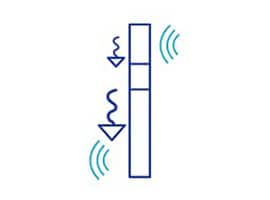
Conducted
Conducted PIM is caused by induced currents reaching a non-linear junction when flowing in conductive structural elements near the antenna. That is, currents are induced in these structural elements when they are exposed to electromagnetic energy created by the antenna. When those currents flow through a non-linear junction, such as antenna mounting brackets, rusty bolts or hose clamps, they can create PIM currents. These induced currents can then cause radiation of PIM from the conductive structural elements back to the antenna. The efficiency of conducted PIM radiation depends on the details of the structure, but in many cases this mechanism is the source of PIM. This type of issue cannot be addressed by existing solutions that cover PIM sources with conductive shields.
-
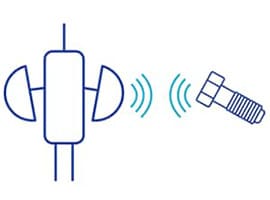
Radiated
Radiated PIM, on the other hand, is generated by a non-linear device directly irradiated by the antenna. In these cases, no induced currents are involved; the antenna itself emits signals that excite nearby non-linear objects, which then radiate signals back to the antenna and cause PIM. For this mechanism, covering the PIM source with conductive shields is effective.
While these differences may seem inconsequential, they present an overlooked variable in PIM reduction — their inciting mechanism. Understanding the difference could help you improve your network and address PIM-related issues in the future.
Why should conducted PIM be addressed?
Regardless of where it comes from, PIM can have a huge impact on network performance, reducing receive sensitivity, data rates, reliability, capacity and more. And let’s face it, PIM is a problem that won’t go away on its own. In fact, as wireless networks densify, additional spectrum is allocated and site colocations continue to increase, it’s very likely PIM will only get worse — unless promptly and properly addressed.
Did you know?
Modern radio access networks (LTE/5GNR) are more vulnerable to PIM effects than legacy systems due to greater bandwidth, increased number of frequency bands, increased data density and other factors. This makes it much more important to stay on top of every possible PIM source, including conducted PIM.
