- Overview
- Products
- Applications
- Cable Jacket Repair
- Data Centers
- Electrical Construction
- Maintenance and Repair
- Wire and Cable Management
- Commercial and Industrial
- Harsh Environments
- View All Applications
- Resources
- Construction Services
- Energy Articles
- Electrical Tape Selector
- Medium Voltage BIM Objects
- View All Resources
- Training
- Support

Powering the Future Requires a Smarter Grid
How intelligence, visibility, and resilience are redefining infrastructure requirements in the global energy transition
The global energy transition is reshaping one of the world’s most critical systems: the electrical grid.
The world is entering what the International Energy Agency (IEA) calls an “Age of Electricity.” Global electricity demand is expected to grow nearly 4% annually through 2027—adding the equivalent of Japan’s entire annual consumption each year. Electricity demand is growing more than twice as fast as overall energy demand, driven by electrification, renewable integration, data centers, and advanced manufacturing. ¹
This rapid shift is placing extraordinary pressure on electricity infrastructure. Utilities are being asked to modernize aging transmission and distribution networks while integrating variable renewable generation, managing bidirectional power flows, and meeting rising expectations for resilience and uptime.
This is not a regional challenge. According to the Statistical Review of World Energy 2025, North America and Europe accounted for nearly 30% of global electricity generation in 2024, totaling more than 9,500 TWh. 2 Whether in mature markets upgrading legacy systems or rapidly developing economies building new capacity, utilities face the same imperative: deliver more reliable electricity through increasingly complex grids.
The future grid must be more intelligent, more connected, and significantly more resilient.
-
Reliability has become the foundation of sustainability
Sustainability conversations often emphasize renewable generation, but renewables alone cannot deliver a reliable energy future without a grid capable of supporting them.
Wind and solar introduce variability that legacy systems were not designed to manage. At the same time, high-demand sectors—from hyperscale data centers to advanced manufacturing—require unprecedented capacity and near-continuous uptime.
Reliability is no longer just an operational concern. It is a business requirement.
As Andy Piepel, Vice President of R&D for 3M’s Electrical Markets Division, explains:
“Whether we’re looking at renewables, data centers or the grid itself, reliability transcends them all. As things become more electrified and more of modern life depends on electricity, anything that contributes to downtime becomes increasingly impactful.”
Modernization therefore means designing infrastructure that performs reliably not just at commissioning, but across decades of operation. That requires moving beyond traditional upgrades toward connected systems with real-time visibility into asset and network performance.
-
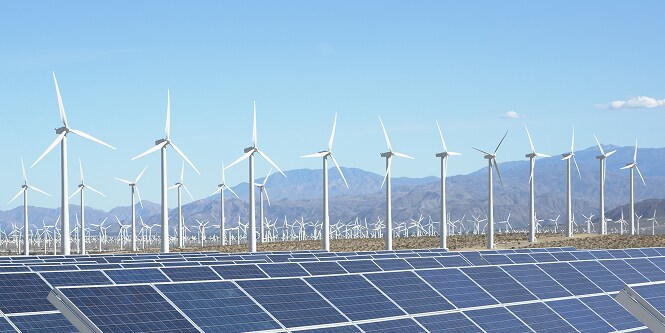
The grid can no longer operate blind
Historically, large portions of underground electrical infrastructure were effectively invisible once installed. Utilities often discovered problems only after failures occurred.
That model is no longer sufficient.
Advanced sensing technologies now enable real-time monitoring of voltage, current, power quality, and cable health. Instead of relying on scheduled maintenance or post-failure response, operators can identify emerging issues earlier, optimize maintenance, and make better operational decisions.
This marks a shift from reactive maintenance to predictive asset management.
As Piepel notes:
“The next evolution of the smart grid is giving customers real-time insight into how power is flowing and how assets are performing, helping them reduce downtime and make better decisions.”
As networks become more distributed and interconnected, visibility is becoming as critical as physical infrastructure itself.
-
Modernization starts long before energization
While grid modernization is often associated with digital platforms and advanced analytics, long-term reliability begins much earlier—during planning and installation.
Every connection in the network affects long-term performance.
As projects grow more complex and skilled labor becomes harder to secure, installation consistency and quality documentation is increasingly critical.
Automation helps address this challenge.
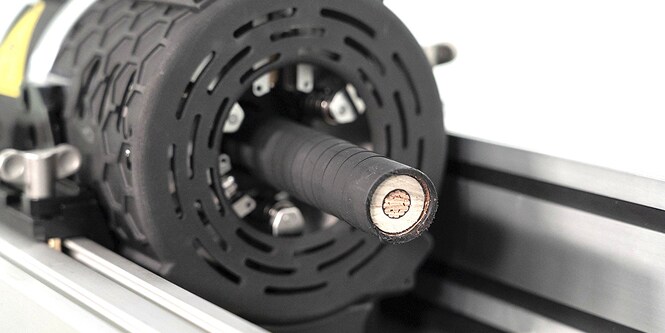
Innovations such as the 3M Cable Quality Preparation System (CQPS) automate a critical step in medium-voltage cable preparation, improving consistency while reducing installation time and providing a digital record. Internal field analysis has shown that roughly 25% of medium-voltage splice and termination failures are linked to cable preparation, highlighting its long-term impact on reliability.
By reducing cable preparation time from roughly 45–50 minutes to 10–11 minutes, CQPS enables electricians to complete more consistent, high-quality installations—supporting expertise rather than replacing it.
Similarly, 3M Cold Shrink technology simplifies splicing and termination by eliminating heat during installation, reducing tool complexity and improving consistency across environments. Together, these innovations reflect a broader shift toward field solutions that enhance both productivity and long-term system performance.
-
Building smarter infrastructure—not just more infrastructure
Meeting rising electricity demand will require unprecedented investment. The International Renewable Energy Agency (IRENA) estimates annual transmission, and distribution investment must nearly double—from about $359 billion today to $671 billion annually through 2030—to support the energy transition. 3
But modernization is not only about scale. Every new cable, substation, and connection becomes part of an interconnected system expected to operate reliably for decades.
That elevates the importance of installation quality, traceability, visibility, and lifecycle performance—not just capacity expansion.
Infrastructure investment is therefore shifting in definition: from discrete capital projects to long-term system assets that must perform reliably over their entire lifecycle.
Thinking beyond installation
The greatest opportunity in grid modernization lies in extending thinking beyond individual products to the full lifecycle of infrastructure.
Modern assets must be identifiable, traceable, monitorable, and maintainable from installation through end-of-life.
That lifecycle mindset begins with planning, continues through installation, and extends well into operations.
During construction, engineered solutions improve reliability and productivity in the field. After commissioning, sensing technologies provide visibility into network health and performance. Years later, locating and marking systems help crews identify underground assets, reducing risk and improving maintenance efficiency.
As Piepel explains:
“We want to support customers through the entire lifecycle—from planning projects and locating assets, to installation, monitoring performance and ultimately replacing infrastructure when it reaches end of life.”
This reflects how 3M works across the infrastructure lifecycle—supporting electricians, contractors, engineers, and asset owners from design through long-term maintenance. The goal is consistent: to improve reliability at every stage, not just during installation.
-
A global challenge requiring global alignment
While regional priorities differ, the underlying challenges are remarkably consistent.
North America is modernizing aging infrastructure while supporting rapid data center growth. Europe is integrating large-scale renewables while strengthening resilience. Asia-Pacific is expanding transmission and distribution capacity alongside rapid urbanization and industrial growth. Emerging economies are building new grids designed for long-term sustainability from the outset.
Across all regions, priorities converge:
· Improve grid reliability
· Accelerate project delivery
· Address skilled labor shortages
· Increase visibility into network performance
· Extend infrastructure life
· Enable future electrification
Meeting these goals requires more than technology. It requires integrated solutions and long-term collaboration across the infrastructure lifecycle.
-

Building confidence for what comes next
The true measure of grid modernization is not how much infrastructure is built, but how reliably it supports an increasingly electrified world.
For utilities, contractors, and asset owners, success depends on decisions made today that shape performance for decades. That means investing not only in capacity, but also in installation quality, operational visibility, and lifecycle intelligence.
At 3M, that approach is central to how we partner with customers. By combining materials science expertise with solutions that support planning, installation, monitoring, and maintenance, we help enable electrical networks designed for long-term performance.
As the energy transition accelerates, the question is no longer whether grids must modernize.
It is how intelligently—and how reliably—they will evolve.
Organizations that invest in resilient, connected infrastructure today will be best positioned to deliver the dependable, sustainable energy systems the future demands.
Sources
¹International Energy Agency (IEA). Electricity 2025: Analysis and Forecast to 2027. Paris: International Energy Agency, 2025.
²Energy Institute. Statistical Review of World Energy 2025, 74th Edition. London: Energy Institute, 2025.
³International Renewable Energy Agency (IRENA). World Energy Transitions Outlook 2025. Abu Dhabi: International Renewable Energy Agency, 2025.
