3M™ Connected Roads All Weather Elements

  • Options available
  • | Select product options for IDs.

High-index composite optics engineered for long-line pavement markings on highways and roadways help ensure safe navigation in all conditions

Compatible with most industry-standard binders, these optics deliver excellent retroreflectivity and durability

Zirconia-enriched microcrystalline ceramic beads are tougher and more efficient than other glass-beaded optic systems, and can be optimized for both dry and wet conditions

View more details

Details

Highlights
  • High-index composite optics engineered for long-line pavement markings on highways and roadways help ensure safe navigation in all conditions
  • Compatible with most industry-standard binders, these optics deliver excellent retroreflectivity and durability
  • Zirconia-enriched microcrystalline ceramic beads are tougher and more efficient than other glass-beaded optic systems, and can be optimized for both dry and wet conditions
  • Helps increase roadway markings visibility for drivers
  • Designed as a drop-on composite optic for liquid-applied markings
  • Bonded core elements utilize advanced technologies to deliver true reflected color and optimized visibility tailored to meet and exceed typical roadway requirements
  • Compatible with most double-drop application equipment

3M™ Connected Roads All Weather Elements offer excellent visibility in wet and dry conditions. They’re engineered with a unique 3M 2.4 (wet) and 1.9 (dry) refractive index bead technology designed to shine in dark and wet roadway conditions. Elements, when used with compatible binders and a second drop of glass beads, form pavement markings that are highly visible, day and night, under both dry and wet conditions.

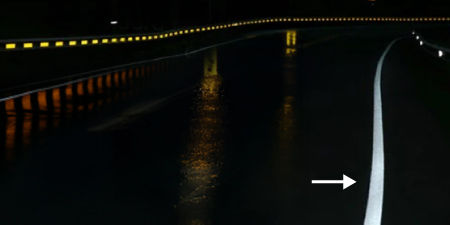
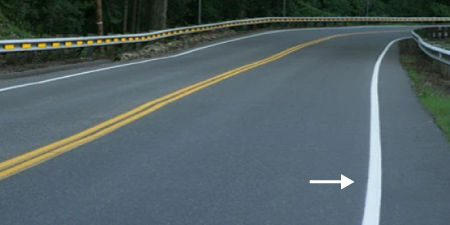
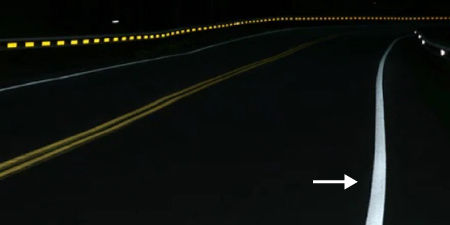
3M Elements perform brighter and better, no matter the conditions

Arrow denotes 3M Elements product; Yellow lines are from another brand.

  • Winding road on a dry day, a bright reflective white road line is highlighted.
    Day

    The non-wet retroreflective yellow lines and the white wet retroreflective line are both visible.

  • Winding road at night, a bright reflective white road line is highlighted.
    Night

    Both non-wet retroreflective and wet retroreflective materials are visible.

  • Winding road at night during the rain, a bright reflective white road line is highlighted.
    Rain

    The competitor product is not wet retroreflective and therefore not visible when wet, while the white wet retroreflective line containing 3M Elements remains visible.


  • Gradient line art icon of a rain cloud and moon representing all weather reflectivity.
    All-Weather Retroreflective Visibility
  • Gradient line art icon of an eye representing brighter road markings.
    Excellent Durability
  • Gradient line art icon of a shield representing excellent durability.
    Brighter Than Standard Roadway Markings
  • Gradient line art icon of an increasing bar/line graph representing optimized performance.
    Optimized Performance

Study shows clearer roadway marking reduces crashes

The Texas A&M Transportation Institute (TTI) studied crashes on a stretch of roads where wet weather pavement markings were installed between 2011 and 2017. The results suggest that 3M Elements wet-weather pavement markings have positive safety benefits in all conditions — wet, dry, day, and night.

Here’s what TTI found:

Gradient background with icons representing a reduction in wet-night crashes and fatal injury.
  • Various road markings at night with different compositions of paint, with All Weather Elements as the brightest.
  • Enable better lane keeping and departure warning

    Almost half of crashes happen at night. Most of those crashes occur in wet conditions and during rainfall, with lack of lane integrity being the other major factor in those crashes.

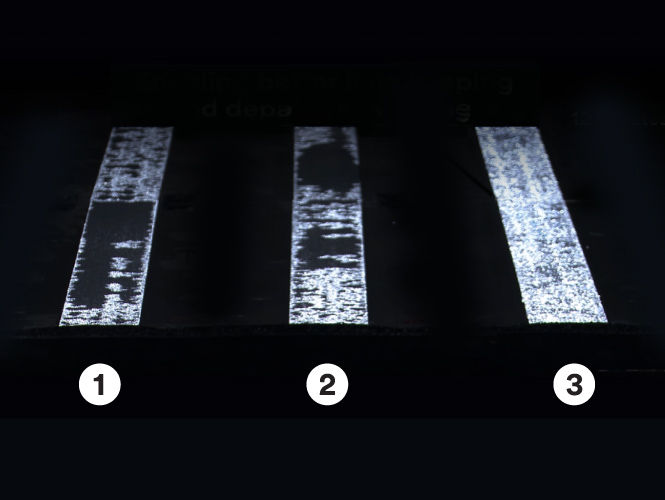
    3M Elements make lines more visible not only in rain and darkness, but also in the clear light of day. As shown in the image, the dark areas on the first two lines indicate water coverage. Even when covered in water, the 3M Elements line shows minimal dark areas, ensuring clear visibility. In combination with durable binders, 3M Elements maintain visibility when water covers the roadway line.


    1. Type 4/1 double drop glass beads (other leading brand)
    2. 18/50 glass blend beads (other leading brand)
    3. 3M Connected Roads All Weather Elements

Typical properties

Resources

Connect with us. We’re here to help.

Need help finding the right product for your project? Contact us if you need product, technical or application advice or want to collaborate with a 3M technical specialist (800) 327-3431
  • All fields are required unless indicated optional

  •  
  • 3M takes your privacy seriously. 3M and its authorized third parties will use the information you provided in accordance with our Privacy Policy to send you communications which may include promotions, product information and service offers. Please be aware that this information may be stored on a server located in the U.S. If you do not consent to this use of your personal information, please do not use this system.

  • Submit

Thank You

Your form was submitted successfully!

Our Apologies...

An error has occurred while submitting. Please try again later...


Frequently asked questions

Connected Roads All Weather Elements enhance roadway visibility in all weather conditions, helping drivers navigate safely. They also aid roadway visibility in all weather conditions across longitudinal and maintenance applications. Proven to reduce nighttime crashes as well as wet-weather crashes during both day and night, the yellow optics provide true nighttime color because 3M beads are color matched. Finally, Elements reflectivity doesn’t depend on the binder quality because they have a reflective composite core.
Wet continuous performance means pavement markings stay visible during active rainfall. To achieve this, the markings use higher refractive index beads that bend light through water and reflect it back to drivers. Wet recovery performance, on the other hand, applies after the rain has stopped and most water has drained away. At this point, less compensation for water is needed, so the markings with lower refractive index beads can maintain visibility. In short, wet continuous is for during the rain, while wet recovery is for after the rain.
Wet continuous performance is the measurement of how retroreflective pavement markings stay during active rainfall. To achieve this, the markings use higher refractive index beads that bend light through water and reflect it back to drivers. Wet recovery performance, on the other hand, is the measurement of how retroreflective the pavement markings are after the rain has stopped and most of the water has drained away. At this point, less compensation for water is needed, so the markings with lower refractive index beads can maintain visibility. In short, wet continuous is for during the rain, while wet recovery is for after the rain.
Elements are most commonly applied to longitudinal lane markings — the lines that guide traffic along the roadway — and to maintenance markings, which are used during roadway repairs or temporary traffic control.
Elements are engineered for long-lasting performance in all conditions — day or night, wet or dry. Road tests show that they maintain high retroreflectivity over time compared to traditional glass beads. In dry conditions, Elements consistently outperform glass beads, even after extended wear. In active rain, they deliver strong visibility and retain performance over time. In wet continuous conditions (during active rain), Elements markings provide significantly better visibility than glass beads, both initially and after months of use. Simply put, Elements are designed to stay bright and effective across all weather scenarios, outperforming conventional options throughout their service life.
No, a warranty is not offered for Elements because there are too many factors that impact performance that are outside of 3M control. However, the product is designed and rigorously tested for long-lasting performance and durability.
Follow the latest application guidelines found in Information Folder 5.23 for best results.
These products work with a variety of pavement marking binders, giving flexibility for different applications. 3M Liquid Pavement Marking (LPM5000), high-build waterborne paint, thermoplastic, epoxy, polyurea (excluding 3M LPM5000), and MMA. For a complete list of compatible binders and specific Elements series options, refer to the product bulletin. Choosing the right binder helps ensure proper adhesion and long-lasting performance.
We have blends that are optimized for balanced wet and dry retoreflectivity and blends that are optimized for higher wet retroreflectivity. For a complete list of specific Elements series blends, refer to the product bulletin to determine the blend that provides the retroreflectivity values needed.

a. Refractive index of the optics

Optics with a 2.4 or higher refractive index are optimal for retroreflectivity in rainy conditions. Optics with 1.5 to 1.9 refractive index retroreflect light when they protrude from water on the surface of the road.


b. Size of optics

Larger or taller optics can more easily protrude from a puddle or film of water and provide a more vertical surface to capture incoming headlamp light to retroreflect to the driver. Glass beads smaller than a few hundred microns in diameter on a flat marking are quickly covered in even low to moderate rainfall events and become invisible at night. Generally, the larger the bead the more rainfall it can accommodate to keep a portion of the bead above the surface. However, at high enough rainfall levels all the optics become covered with a film of water, and if the optics are only optimized for dry performance (1.5 to 1.9 refractive index), they will become invisible at night as well. Optics with 2.4 or higher refractive index beads work best when covered with a film of water.


c. Water surface – glassy smooth vs. rippled/raining vs. flowing

When light hits a glassy smooth surface, like a still puddle, some of the light reflects off of it, and some penetrates the water to reach the optics. Less light will penetrate at longer distances and higher angles. Rain or flowing water disrupts the smooth surface, allowing more light to penetrate and reach the optics so they can retroreflect the light. To minimize the negative effects of still puddles covering the markings, roads should be designed with adequate cross slope, and grooves, if used, should be cut following manufacturers’ recommended depth to balance visibility and protection from snowplows. When puddles over the marking cannot be avoided, optics that can retroreflect when underwater, such as those with 2.4 or higher refractive index beads, provide the longest viewing distances for drivers.


d. Viewing distance

Higher wet retroreflectivity performance is needed to see markings at longer distances. This is true for wet and dry retroreflectivity.


e. Water depth and clarity

The deeper and dirtier the water is over the marking, the more likely it is to filter light, preventing some portion of the light from returning to the driver.


f. Grade and cross slope of the road

Roads with sufficient cross slope and/or grade allow the water to flow over the marking, which improves wet retroreflectivity by preventing the water from forming a glassy smooth surface.


g. Hydrophobicity

Hydrophobicity, literally meaning fear of water, is a phenomenon that typically affects new markings. Their surfaces are smoother and may contain water repellent treatments or components. Water can easily bead up and shed from the markings and optics, like from off a raincoat, providing a partially dry surface. This allows optics with 1.5 to 1.9 refractive index to be much more visible than if there was a continuous film of water over the surface. With exposure to traffic and weather, the surface becomes more hydrophilic (water-loving), and the optics are more easily covered by water. Wet-reflective optics with 2.4 or higher refractive index are optimized for these conditions.
Contact a Sales Rep

If you are a Traffic Engineer or Pavement Marking Installer and would like to see a demo of the 3M Connect Roads All Weather Elements or would like to discuss how 3M can help you with your next project, please provide the information below and we will contact you within two business days.

  • All fields are required unless indicated optional

  • 3M takes your privacy seriously. 3M and its authorized third parties will use the information you provided in accordance with our Privacy Policy to send you communications which may include promotions, product information and service offers. Please be aware that this information may be stored on a server located in the U.S. If you do not consent to this use of your personal information, please do not use this system.

  • Submit

Our apologies...

An error has occurred while submitting. Please try again later...

Thank you!

Your form was submitted successfully

Related products

Disclaimer

*Source: Park, ES., Carlson, P., Pike, A., “Safety Effects of Wet-Weather Pavement Markings.” Transportation Research Board 2019 Annual Meeting: Available from: https://trid.trb.org/view/157225